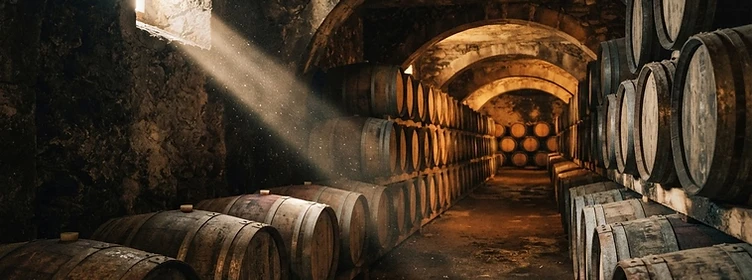
From Spanish mission plantings through Prohibition and the Judgment of Paris to the modern AVA era — cross-linked to the regions, varietals, and producers they shaped.
1769Mission Era
Spanish missions plant the first vines
Franciscan friars accompanying Junípero Serra planted the 'Mission' grape at Mission San Diego de Alcalá, establishing California's first vineyards for sacramental wine. Mission plantings spread north along El Camino Real through the 18th century.
Napa ValleySonoma County
1839Gold Rush Era
George Yount plants Napa's first vines
George Calvert Yount planted the first vines in Napa Valley at his Rancho Caymus grant, marking the transition from mission viticulture to secular, commercial plantings in the region that would become California's flagship.
Napa Valley
1857Gold Rush Era
Agoston Haraszthy founds Buena Vista Winery
Hungarian-born Agoston Haraszthy established Buena Vista Winery in Sonoma, championing European vinifera varieties and later importing cuttings from Europe, helping shift California toward quality vinifera over the Mission grape.
Sonoma County
1861Gold Rush Era
Charles Krug founds Napa's first commercial winery
Charles Krug established his winery in what is now Rutherford, building the foundation of Napa's commercial industry and training a generation of winemakers including the Mondavi family's forebears.
RutherfordNapa Valley
1880Phylloxera & Replanting
Phylloxera reaches California
The aphid Phylloxera, which had devastated European vineyards, reached California in the 1880s. The crisis forced replanting on resistant American rootstock, transforming the state's vineyard architecture and varietal selection.
Napa ValleySonoma County
1920Prohibition
Prohibition begins
The 18th Amendment and Volstead Act (1920–1933) banned commercial alcohol production, devastating California's wine industry. Vineyards were uprooted or converted to table grapes; only sacramental and home-winemaking production survived, hollowing out a generation of expertise.
Napa ValleySonoma County
1933Rebirth
Prohibition repealed
Repeal in 1933 restarted the industry from a depleted base. The post-Repeal decades saw slow rebuilding, dominated by large bulk-wine producers; fine wine would only re-emerge in earnest in the 1960s.
1965Rebirth
David Lett plants Oregon's first Pinot Noir
David Lett planted the Willamette Valley's first Pinot Noir and Pinot Gris, betting that the cool, maritime climate could rival Burgundy. His Eyrie Vineyards 1975 Pinot would later place in a Burgundy-led blind tasting, putting Oregon on the world map.
Willamette ValleyDundee Hills
1966Rebirth
Robert Mondavi founds his namesake winery
Robert Mondavi opened his Oakville winery in Napa Valley, the first major new winery in the valley since Prohibition, championing cold fermentation, oak aging, and varietal labeling — and defining the modern California fine-wine model.
Napa Valley
1976Judgment of Paris
The Judgment of Paris
In a 1976 blind tasting in Paris, Stag's Leap Wine Cellars' 1973 Cabernet and Chateau Montelena's 1975 Chardonnay defeated top French wines, announcing California — and Napa in particular — as a world-class region. The event reshaped global perceptions of New World wine.
Stags Leap DistrictNapa Valley
1983Modern Era
Napa Valley and Yakima Valley become AVAs
The federal AVA system, established under TTB authority, began designating American Viticultural Areas. Napa Valley (1983) and Yakima Valley (1983) were among the earliest, formalizing the concept of terroir-based appellations in the United States.
Napa ValleyYakima Valley
1984Modern Era
Willamette Valley recognized as an AVA
The Willamette Valley AVA was established in 1984, formalizing Oregon's Pinot Noir region. Subsequent decades saw nested sub-AVAs (Dundee Hills, Eola-Amity, and others) carved out to distinguish distinct soil series and microclimates.
Willamette Valley
2001Modern Era
Red Mountain and Rogue Valley AVAs established
The early 2000s saw rapid AVA expansion, including Washington's Red Mountain (2001) and Oregon's Rogue Valley (2001), reflecting the maturation and differentiation of West Coast wine regions by terroir.